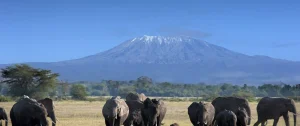
Mount Kilimanjaro national park Tanzania is standing tall at 5,895 meters (19,341 feet), The Mount Kilimanjaro is the highest mountain in Africa and one of the most iconic natural landmarks in the world. It lies within the protected borders of Mount Kilimanjaro National Park Tanzania, a conservation area dedicated not only to the mountain itself but also to the surrounding montane forests and alpine zones.
This park draws climbers from all over the world who dream of standing atop the “Roof of Africa.” But even for non-climbers, the park offers rich biodiversity, panoramic views, and cultural significance that appeal to nature lovers, researchers, and photographers. Unlike many of the world’s tallest peaks, climbing Mount Kilimanjaro requires no technical mountaineering skills, which makes it a dream destination for both seasoned hikers and adventurous first-timers.
Mount Kilimanjaro National Park is situated in the Kilimanjaro Region in northeastern Tanzania, just a short drive from the bustling town of Moshi. The park lies about 300 kilometers southeast of Nairobi and 100 kilometers east of Arusha. It is easily accessed through Kilimanjaro International Airport (JRO), which serves both local and international flights. From the airport, visitors can reach the park entrance within an hour.
Mount Kilimanjaro is not a single mountain, but a massive stratovolcano with three distinct volcanic cones:
Kibo is the tallest and only dormant cone, and it’s where climbers reach the summit at Uhuru Peak. Covered with glaciers and snowcaps, this cone is the ultimate destination for trekkers, symbolizing victory, endurance, and the spirit of exploration.
This jagged, rugged peak lies to the east of Kibo and offers a striking contrast with its sharp ridges. Mawenzi is not climbed as frequently due to its technical demands, but it presents incredible views and photographic opportunities.
Located on the western side, Shira is the oldest of the three cones. It collapsed thousands of years ago, forming the Shira Plateau, a scenic region used as a campsite on the Lemosho and Shira routes.
No, it is not. One of the unique features of climbing Mount Kilimanjaro is that it does not require specialized mountaineering equipment or skills. It’s a high-altitude trek that challenges your endurance, not your climbing technique. This makes it ideal for hikers with moderate fitness levels and a strong will.
There are several well-maintained trails to the summit of Mount Kilimanjaro, each offering unique scenery, acclimatization rates, and crowd sizes:
Often called the “Coca-Cola Route” due to its popularity and hut accommodation, Marangu is the only route with sleeping huts. It is relatively easier but has a lower summit success rate because of its shorter acclimatization period.
Also known as the “Whiskey Route,” Machame is scenic, challenging, and well-suited for physically prepared trekkers. It includes steeper sections but offers a higher success rate thanks to better altitude adaptation.
This trail is praised for its beauty, low traffic, and high summit success rate. It starts on the western side and joins the Machame route later, providing a longer and slower ascent—ideal for acclimatization.
Approaching Kilimanjaro from the north near the Kenyan border, Rongai is drier and less busy. It’s suitable for rainy-season treks and offers a gradual climb, although it’s less scenic than western routes.
The most direct and steepest route, Umbwe is physically demanding and best for experienced hikers. It offers less time for acclimatization and is often chosen by those looking for a serious challenge.
Despite being primarily a climbing destination, Mount Kilimanjaro National Park is also a haven for wildlife, especially in the lower elevations. In the rainforest, you may encounter:
Blue monkeys
Colobus monkeys
Bush babies
Forest elephants
Buffalo
Duikers
Bird enthusiasts will appreciate sightings of species like the malachite sunbird, Hartlaub’s turaco, and the Abyssinian crimsonwing. Wildlife sightings decrease as you ascend due to harsher conditions, but birdwatching and nature walks on the lower slopes are highly rewarding.
Climbing Mount Kilimanjaro is like walking from the equator to the Arctic in a few days. The park is divided into five ecological zones, each with distinct landscapes and temperatures:
Cultivated Zone (800–1,800m) – Farmlands on the lower slopes, often inhabited by local Chagga communities.
Rainforest Zone (1,800–2,800m) – Dense with green vegetation and home to monkeys, birds, and small antelopes.
Heather and Moorland Zone (2,800–4,000m) – Characterized by giant groundsels and eerie mist, this zone is surreal and mystical.
Alpine Desert Zone (4,000–5,000m) – Harsh, dry, and windy, with sparse vegetation but dramatic scenery.
Arctic Summit Zone (5,000–5,895m) – Glaciers, snow, and freezing temperatures make this zone both breathtaking and unforgiving.
Climbing Mount Kilimanjaro National Park Tanzania is more than a physical journey—it’s a spiritual, emotional, and cultural experience. It challenges your limits, rewards your perseverance, and connects you to one of Earth’s most extraordinary landscapes. Whether you conquer Uhuru Peak or explore the forest trails at the base, Kilimanjaro leaves an imprint on every traveler’s heart.
Timing your climb is crucial for safety and comfort. The best seasons to hike Mount Kilimanjaro are:
January to early March: Clear skies and less traffic.
June to October: Dry weather and the most popular period for climbing.
Avoid the rainy seasons between March to May and November, as trails become slippery, and views are often obscured by clouds.
Your packing list can make or break your experience. Essential items include:
Thermal base layers and insulated jackets
Waterproof hiking boots and gaiters
Headlamp, trekking poles, and gloves
Sunblock, sunglasses, and lip balm
Hydration system and high-energy snacks
Altitude sickness is a serious risk. To prevent it, opt for longer routes, stay hydrated, and follow the guides’ acclimatization advice. Physical preparation through cardiovascular exercises, hiking, and endurance training is strongly recommended.